Chefchaouen — Beyond the Blue Walls
Morocco's blue city has become a social-media monoculture, but spend two slow days there and a different town emerges.
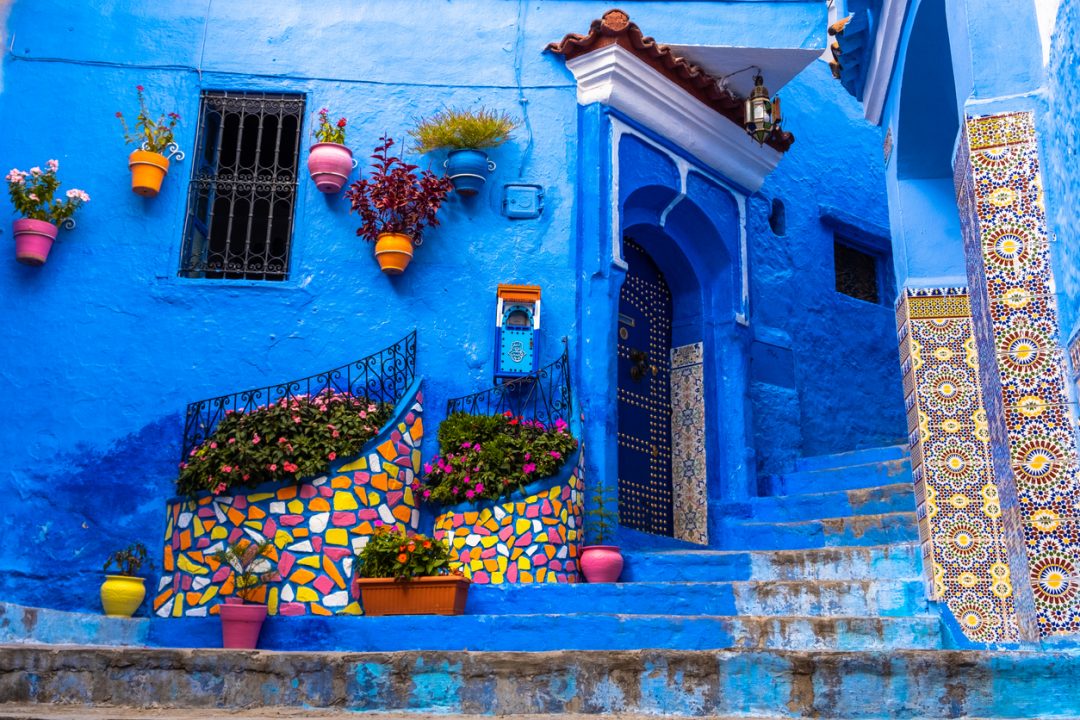
You've already seen the photos. Cobalt staircases, indigo doorways, women in striped djellabas climbing alleys that look painted by someone with one tube of paint. Chefchaouen has become its own genre on social media, which is both why people come and the reason it can feel disappointing if you only stay for an afternoon.
Give it two nights. The town that emerges between sunset and sunrise — when the day-trip vans go home — is a slower, kinder Morocco, and it's the one worth flying for.
A short history that explains the blue
Chefchaouen was founded in 1471 as a fortress against Portuguese incursions from the coast. For most of its first 450 years it was closed to outsiders entirely. The blue paint is recent — only since the 1930s, traced (depending on whom you ask) to Jewish refugees from Europe who associated blue with the divine, or to a more practical theory that the color repels mosquitoes from the wet Rif climate.
What's certain: the town repaints every spring. The shade isn't fixed. Wander the same alley in March and August and the blue will have shifted half a hue.
The first afternoon: just walk
Don't plan. Don't open the map. Start at Plaza Uta el-Hammam (the main square, where the kasbah is) and pick the steepest alley going up. Follow it until it dead-ends or branches, take whichever branch goes higher, repeat.
You will hit:
- A tiny square with a single café and four cats.
- A weaving cooperative selling wool blankets at honest prices.
- A staircase that's been a Pinterest screensaver for ten thousand strangers.
- A doorway where someone gestures you in to look at lamps. Look at the lamps. You don't have to buy one.
The whole medina fits in about an hour of climbing, and you'll see the same alleys from three angles by the end of it. That's part of the charm — it's small enough to learn by feel.
Where the magic actually is
Two specific moments are worth structuring your day around:
Sunrise from the Spanish Mosque. A 25-minute walk from the medina, up the hill across the river. Get there for the first light — around 6:30am in summer, 7:15am in winter. The whole town glows blue underneath you, with the Rif mountains behind. There will be 6 other people there at sunrise. There will be 200 at 9am.
Sunset from Plaza Uta el-Hammam. Pick a café terrace that looks east at the kasbah's ochre walls. Order a mint tea and a tagine for early dinner. As the sun drops behind you, the kasbah lights up gold against the deepening blue of the houses behind. It's the only moment when the colors fight each other instead of cooperating, and it's spectacular.
Day two: into the mountains
Chefchaouen sits at 600m in the Rif, and the surrounding hills are the part most travelers miss.
- Akchour waterfalls — 40 minutes by taxi, then a 2-hour hike each way. Two falls, the second one bigger. A clear pool you can swim in. Pack lunch from the medina; the stalls at the trailhead are overpriced.
- God's Bridge — same trailhead as Akchour, different fork. A natural rock arch, an easier walk. Combine with the falls if you have stamina.
- Talassemtane National Park — bigger trip, ideally with a guide. Cedar forest, Barbary macaques, real solitude. Day-hire a guide in town for 400–600 dirhams.
If you'd rather stay in town, spend day two on the cooperatives. The women's weaving co-op near Bab el-Ain produces blankets, scarves, and rugs. Prices are fixed, quality is honest, and proceeds support local women's literacy programs. It's the rare souvenir purchase you can feel good about.
Food and where to eat
Chefchaouen's food is North Moroccan with Andalusian inflection — more goat cheese, more olives, more bread with za'atar than you'll find in the south. A few finds:
- Bab Ssour — best tagine in town for the price, three blocks off the main square. The seafood tagine is the play, even though Chefchaouen is two hours from the coast.
- Café Clock — the Marrakech transplant has a Chefchaouen branch with a rooftop. Better for a long lunch than for atmosphere.
- Aladdin — overpriced, touristy, but the rooftop terrace at sunset earns the markup once.
- Anything with an old man making msemen on a flat-top griddle. The flaky square pancake folded around honey or cheese is the breakfast of the region.
What to know before you go
- It's a stoner town, sort of. The Rif is Morocco's cannabis-growing region, and you'll be offered hash within five minutes of arriving in the medina. Buying or carrying it is illegal. The polite refusal is "la, shukran" and a smile.
- Dress code is slightly more conservative than in Marrakech or Casablanca. Loose trousers and shoulders covered for women is appreciated, especially outside the main square.
- Cash only at most riads and small restaurants. There are two ATMs in town, both near Plaza Mohammed V.
- Getting in: 4 hours by bus from Tangier (the easy route), 4.5 from Fès, 6 from Rabat. CTM and Supratours are reliable; the smaller bus lines are not.
- Stay in the medina, not the new town. The whole point is waking up inside the blue.
Two-night plan
Day one: Arrive late afternoon, settle into a riad. Climb the medina aimlessly. Sunset on Plaza Uta el-Hammam with mint tea. Dinner at Bab Ssour. Early sleep.
Day two: Sunrise at the Spanish Mosque. Breakfast back in town (msemen with honey, fresh OJ). Taxi to Akchour, hike, swim, return by 4pm. Lazy afternoon, maybe a hammam. Final dinner at a riad terrace.
Day three: A slow morning. Coffee in the square. One last walk through alleys you haven't seen. Bus out by mid-afternoon.
It's a small town. That's the point. Two nights is exactly enough — one is too few, three is too many. Stop checking your phone, climb a staircase, lose yourself in a color.